Static vs. Dynamic ADAS Calibrations: What's the Difference?
Both static and dynamic calibrations ensure ADAS systems operate correctly after a repair—the difference is how they're performed, and which method the manufacturer requires.
Posted: June 15, 2026
Author: Jaden Shah
Introduction
If you've worked on a late-model vehicle recently, chances are you've dealt with ADAS calibration requirements.
What used to be a relatively straightforward repair process now often involves cameras, radar sensors, lane-keeping systems, adaptive cruise control, and a growing list of other technologies that need to be calibrated before the vehicle can be returned to the customer.
That's where one of the most common questions in the industry comes up: What's the difference between a static and dynamic calibration?
The short answer is that both are designed to ensure ADAS systems operate correctly after a repair. The difference is how the calibration is performed—and more importantly, which method the manufacturer requires.
Let's take a closer look.
Why This Matters More Than Ever
A few years ago, ADAS calibrations were something many shops encountered occasionally.
Today, they're part of everyday repairs.
A windshield replacement, bumper repair, wheel alignment, or suspension repair can all trigger calibration requirements depending on the vehicle. Missing one isn't just a documentation issue—it can impact vehicle safety, create liability concerns, and potentially lead to reimbursement headaches down the road.
That's why understanding calibration requirements has become an important part of repair planning.
What Is a Static Calibration?
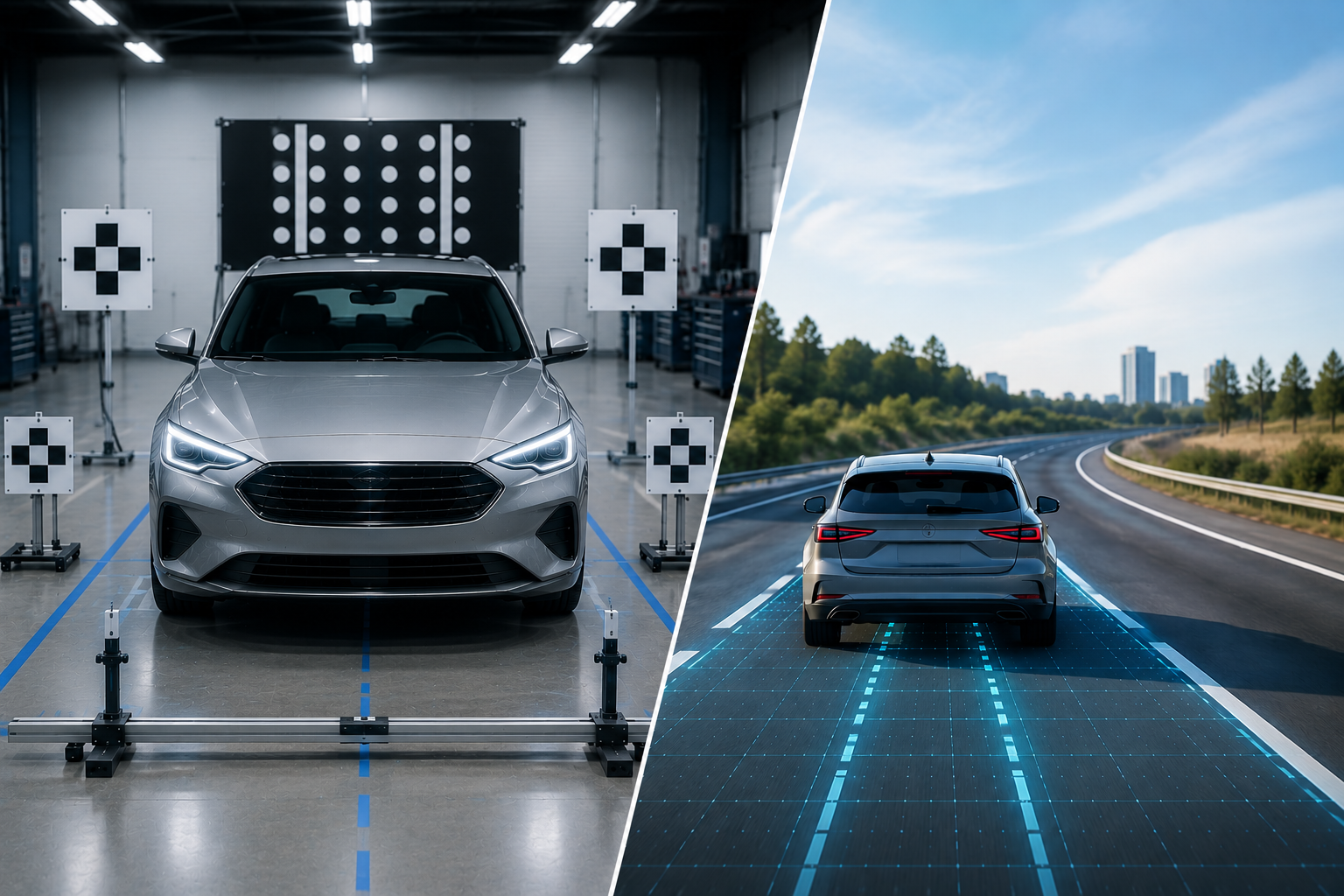
Think of a static calibration as a calibration that's performed in a controlled environment.
The vehicle stays parked while technicians use targets, measuring tools, and diagnostic equipment to calibrate the system according to OEM specifications.
If you've ever walked through a calibration center and seen targets set up around a vehicle, you've likely seen a static calibration being performed.
These calibrations typically require:
- A level floor
- Precise measurements
- Controlled lighting conditions
- Proper target placement
Because the setup is so precise, even small measurement errors can affect the outcome. That's why following OEM procedures is critical.
What Is a Dynamic Calibration?
Dynamic calibrations work a little differently.
Instead of using targets inside the shop, the vehicle is driven on the road while the system learns and verifies its surroundings.
Depending on the manufacturer, technicians may need to maintain certain speeds, drive for a specific distance, or operate under particular road conditions before the calibration can complete.
In other words, the vehicle uses the real world as its reference point.
Sounds simple, but anyone who's tried to complete a dynamic calibration during bad weather or on roads with poor lane markings knows it doesn't always go exactly as planned.
Is One Better Than the Other?
This is probably the biggest misconception surrounding ADAS calibrations.
Many people assume static calibrations are more accurate because they're performed in a controlled environment. Others assume dynamic calibrations are better because they're performed under real-world driving conditions.
The truth? Neither is "better."
The correct calibration is the one the OEM requires.
Some vehicles need static calibration. Some need dynamic calibration. Some require both.
The manufacturer's procedure is always the deciding factor.
The Real Challenge Isn't Performing the Calibration
For most repair facilities, the hardest part isn't actually performing the calibration.
It's knowing what the vehicle requires in the first place.
Requirements vary by manufacturer, model year, trim level, and even individual vehicle options. What applies to one vehicle may not apply to the next one parked beside it.
That's why more shops are spending time identifying calibration requirements early in the repair process rather than waiting until the vehicle is ready to leave.
ADAS Find helps make that process easier by identifying calibration requirements and providing direct access to OEM documentation. Instead of digging through multiple sources, shops can quickly determine whether a static calibration, dynamic calibration, or both may be required.
Documentation Is Becoming Just as Important
Once the calibration is complete, the work isn't necessarily done.
Shops are increasingly being asked to document what was identified, what was required, and what was performed.
Whether it's for internal records, customers, insurers, or shop management, having clear documentation helps create consistency throughout the repair process.
That's why ADAS Find doesn't stop at calibration identification. The platform also helps shops generate professional reports, organize repair records, and maintain visibility across technicians, locations, and completed work.
Final Thoughts
Static and dynamic calibrations may be performed differently, but they serve the same purpose: making sure a vehicle's ADAS systems operate as intended after a repair.
The key isn't deciding which method is better. It's identifying which method the manufacturer requires and making sure it's properly documented.
As ADAS technology continues to evolve, shops that can quickly identify requirements, access OEM documentation, and maintain organized records will be better positioned to deliver safe repairs and efficient workflows.
ADAS Find was built to help make that process easier—from calibration identification to documentation and reporting.